What Is Infidelity — and Why It’s More Complex Than You Think
Infidelity isn’t a single, simple act. Researchers define it broadly as any violation of a couple’s agreed-upon sexual or emotional exclusivity — whether physical intimacy, romantic involvement, or emotional closeness outside the committed partnership. Importantly, physical infidelity refers to sexual contact outside the relationship, while emotional infidelity involves forming a bond that displaces the emotional connection between partners. Research shows that emotional betrayal can be as distressing — or more so — than physical affairs.
How Common Is Infidelity?
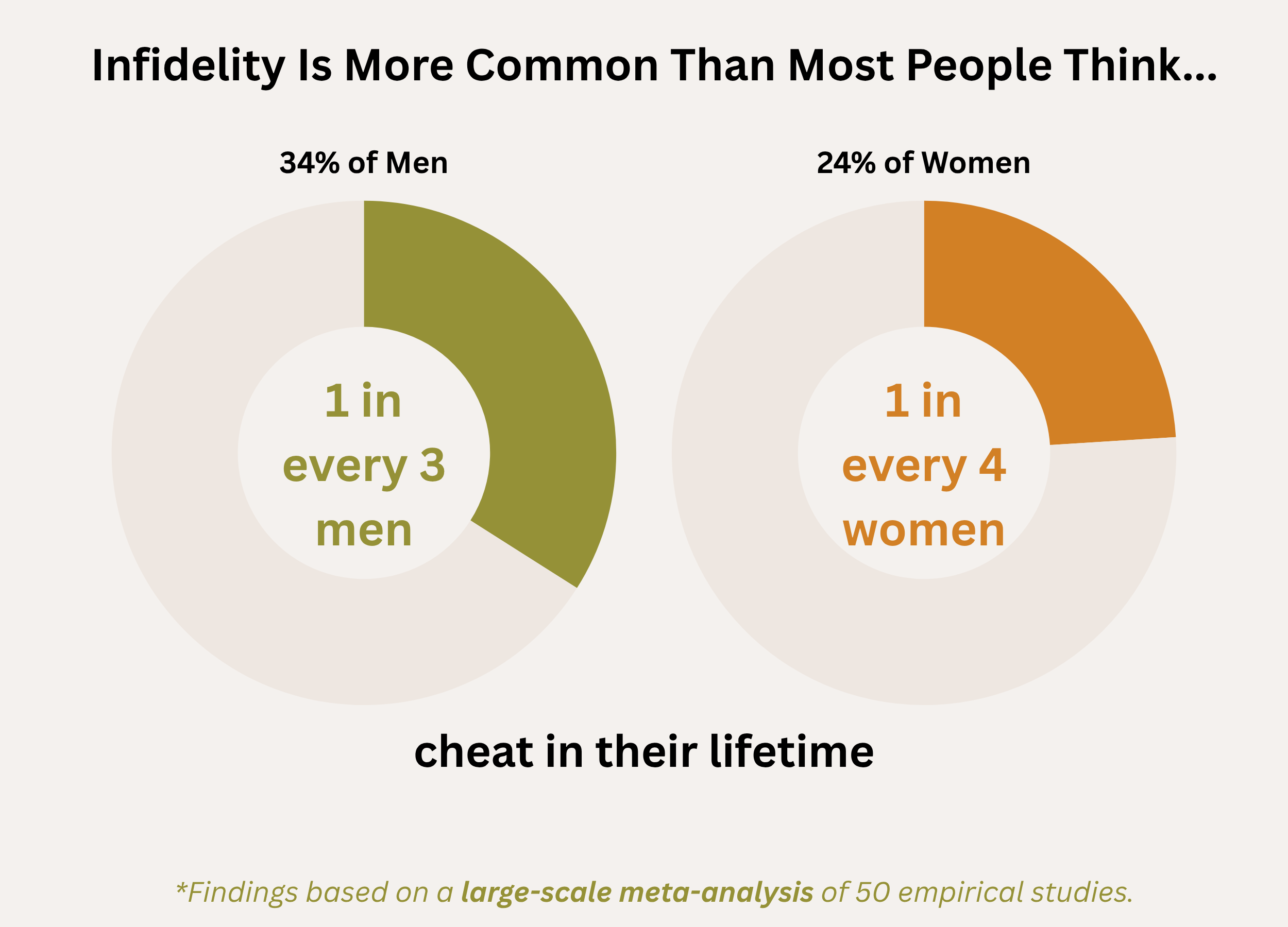
Infidelity is more common than many people realize. According to a meta-analysis of 50 studies, about 34% of men and 24% of women reported engaging in infidelity during their lifetime . Short-term annual prevalence of sexual infidelity is estimated at 2–4% of married adults in population-based samples.
Why Infidelity Happens: What Research Shows
Infidelity rarely occurs in a vacuum. Reviews highlight multiple factors: Emotional disconnection — feeling unheard or unseen — increases risk of extradyadic involvement. Relationship dissatisfaction and lower commitment are strongly correlated with infidelity. Individual differences such as personality traits and attachment styles influence vulnerability. Opportunity and lack of boundaries, such as prolonged time away from a partner or frequent interaction with an attractive third party without accountability, also increase risk. All of these patterns reflect relational or emotional gaps, not mere moral failings.
The truth is that there is no one big reason cheating happens. Cheating is often a result of a multitude of factors that are unique to each relationship.
How to Heal After Cheating
Trust forms the emotional foundation of a relationship. When compromised, people experience heightened emotional distress and uncertainty, and attachment and security within the relationship are destabilized.
“Trust isn’t fixed — it can be rebuilt through consistent, transparent, and attuned interaction.”
Evidence-Based Ways to Strengthen Trust
Healing from infidelity—or preventing it—doesn’t come from perfection. It comes from consistent, intentional connection.
Trust is not rebuilt in one grand gesture.
It’s rebuilt in small, daily choices:
- To listen
- To be honest
- To show up
- To care
And most importantly…
To choose each other again and again. Here are five ways to build trust in a relationship:
Daily Emotional Check-Ins
Spend 5–10 minutes sharing needs and feelings. Helps partners stay attuned, reducing unmet needs that fuel disconnection.
Taking just 5–10 minutes each day to share your feelings, emotional needs, and inner experiences may seem simple—but it is one of the most powerful ways to prevent emotional disconnection in relationships, which is often a hidden root of infidelity.
In many cases, cheating in marriage doesn’t begin with physical betrayal—it begins with emotional distance. When partners stop feeling seen, heard, or understood, unmet emotional needs can quietly build over time. This emotional gap can make external validation or connection feel more tempting.
Daily check-ins gently interrupt that pattern.
They create a safe space where both partners can say:
- “This is how I’m really feeling today”
- “This is what I need more of”
- “This is where I feel disconnected”
Over time, this habit:
- Reduces resentment and emotional buildup
- Strengthens emotional intimacy in marriage
- Helps partners feel chosen, valued, and prioritised
In the context of healing after cheating, daily emotional check-ins help rebuild trust by showing consistency, presence, and emotional availability—key ingredients in repairing a relationship after infidelity.
Intentional Transparency
Share vulnerabilities and meaningful interactions in a safe, respectful way.
Intentional transparency means choosing openness—not out of fear, but out of care for the relationship.
After cheating has occurred, trust is often broken not just because of the act itself, but because of secrecy, hidden communication, and emotional withdrawal. Transparency becomes a bridge back to safety.
This can look like:
- Sharing thoughts, feelings, and struggles honestly
- Being open about interactions that could feel sensitive
- Allowing your partner to feel included rather than shut out
But it’s important to approach this with softness, not control. Transparency is not about surveillance—it’s about restoring emotional safety after betrayal.
When practiced consistently, it:
- Reduces anxiety and suspicion in the relationship
- Rebuilds emotional security after infidelity
- Encourages vulnerability instead of defensiveness
For couples healing from cheating, intentional transparency sends a powerful message:
“I’m choosing honesty, even when it’s uncomfortable—because our relationship matters.”
Respond to Emotional Bids
According to Gottman research, responding to small connection bids strengthens emotional closeness.
Emotional bids are the small, everyday ways we reach for connection:
- A message during the day
- A story shared after work
- A simple “Can we talk?”
Research shows that relationships thrive when partners turn toward these bids instead of ignoring or dismissing them.
When emotional bids are repeatedly missed, a partner may begin to feel:
- Unimportant
- Unseen
- Emotionally alone
This emotional loneliness is one of the most common pathways toward emotional affairs or seeking connection outside the relationship.
By responding to emotional bids, you:
- Reinforce emotional closeness and safety
- Prevent feelings of rejection and neglect
- Build a strong foundation that protects against infidelity
In relationships recovering from cheating, consistently responding to emotional bids helps rebuild trust slowly. It shows attentiveness, care, and a willingness to reconnect—moment by moment.
Shared Rituals and Time Together
Rituals like weekly date nights or shared hobbies predict higher satisfaction (ScienceDirect).
Shared rituals—like weekly date nights, morning coffee together, or even a Sunday walk—create predictable moments of connection.
After cheating, relationships often feel unstable and uncertain. Rituals bring back a sense of:
- Consistency
- Safety
- Emotional grounding
They remind both partners:
“We are still choosing each other.”
These rituals are especially powerful because they:
- Strengthen emotional bonding over time
- Create positive shared experiences
- Replace painful memories with new, meaningful ones
For couples healing after infidelity, shared rituals are not just habits—they are gentle acts of rebuilding. They help transform the relationship from a place of pain into a space of renewed connection and intention.
Address Problems Early
Approach conflict with curiosity, self-reflection, and honesty.
Unspoken issues don’t disappear—they deepen.
When conflict is avoided, it often turns into:
- Resentment
- Emotional withdrawal
- Passive disconnection
Over time, this creates the kind of emotional distance where cheating in a relationship becomes more likely, not as an excuse, but as a symptom of deeper disconnection.
Addressing problems early means:
- Approaching conversations with curiosity, not blame
- Taking responsibility for your own emotions
- Creating space for honest, respectful dialogue
This helps couples:
- Resolve tension before it escalates
- Feel emotionally safe expressing needs
- Strengthen communication and trust
In the process of rebuilding a relationship after cheating, learning to address issues early is essential. It prevents repeating the same patterns and creates a new, healthier foundation built on honesty and emotional awareness.
Reflection Questions
- Where do I feel emotionally connected or distant from my partner?
- How safe do I feel expressing unmet needs?
- How do we respond when one partner seeks connection?
Journaling or discussing these questions helps identify areas for deeper connection.


